If you wish to fly for an airline in Europe, the course is structured, requiring, and extremely possible if you recognize what you are registering for. That tail end issues more than many people realise. I have actually fulfilled a lot of aiming pilots that recognized the beauty variation of the work, the attire, the trip deck, the traveling, however had only an obscure concept of the training criteria, the licensing route, or the financial dedication. Individuals that do best are seldom the loudest daydreamers. They are the ones who transform the desire into a plan.
Europe has one big benefit for pilot training: a relatively standardised regulative structure. If you educate under EASA, the European Union Air Travel Safety And Security Firm, you are functioning within a system that many airlines and training companies understand well. That does not indicate every school is equivalent, or every course equals, however it does imply there is a recognised ladder from zero hours to airline flight deck.
Becoming airline-ready is not the exact same point as simply getting a business pilot licence. Airline companies want much more than that. They desire a candidate who has the best permits, passes medical standards, manages pressure, researches regularly, and behaves like a specialist long before the initial airline meeting. The flight schol difference is very important due to the fact that several students focus on gathering qualifications and just later on understand they have not gotten ready for the working with side of the business.
Start with the truth, not the romance
Flying is a remarkable profession, but it is not an affordable leisure activity that becomes a work by mishap. In Europe, a full training route from no experience to an airline company access standard can set you back anywhere from approximately EUR70,000 to well over EUR120,000, depending on the nation, school, aircraft fleet, lodging, test attempts, and whether the course consists of a kind score. Some integrated programs sit even greater. Those numbers change with fuel prices and inflation, so treat them as a working array, not a promise.
The way of life during training likewise captures people off guard. You might be examining meteorology in the morning, battling with efficiency computations after lunch, after that changing air regulation late into the evening. You could train in inadequate weather condition for weeks, after that unexpectedly fly multiple fields in a brief home window when the problems clear. It is psychologically intense. Individuals that succeed are commonly not individuals with one of the most "all-natural skill", yet the ones that appear prepared, soak up comments without ego, and maintain going when development feels uneven.
Before you schedule a trial lesson, ask yourself a few ordinary concerns. Can you fund the training without wagering your future? Can you tolerate unpredictability and postponed gratification? Are you comfortable with a career where clinical health and fitness is not optional, and where recurring checks continue for as long as you fly skillfully? If the response is indeed, you are already assuming like somebody who can make this work.
The licence path most individuals follow
There are two wide means to learn Europe: incorporated and modular. Integrated training is a permanent, bundled program run by a trip institution, often taking you from no to a frozen ATPL in one structured bundle. Modular training damages the process right into separate actions that you can finish over time, in some cases while working one more work. Neither path is automatically far better. The best selection depends on your spending plan, learning style, flexibility, and appetite for risk.
At a high level, the path typically resembles this:
Class 1 medical Private Pilot Permit, or straight entrance into an integrated course Hour structure and ATPL theory Commercial Pilot Permit, tool rating, and multi-engine training MCC and often UPRT, after that airline applicationsThat straightforward sequence conceals a great deal of information, however it provides you the shape of the trip. In Europe, what many individuals call an "airline-ready" licence plan is often an icy ATPL. That suggests you have completed the ATPL academic expertise exams and hold the sensible permits and rankings required to work as an industrial pilot, normally consisting of CPL, IR, and ME certifications. The ATPL itself becomes "unfrozen" only after you build the called for flight experience later on in your career.
Your Class 1 medical comes first
This is the smartest cash you will invest at the start. Prior to paying deposits to a flight college or revealing your new occupation strategy to every person you understand, schedule a Class 1 clinical with an authorised aero-medical inspector or centre. If you can not hold a Class 1 medical, the airline pilot path comes to be very tough or impossible.
The medical is not there to capture you out. It exists since airline companies run within a safety-critical system where physical and mental health and fitness issue. Vision, hearing, cardiovascular health and wellness, neurological background, and other clinical aspects are all evaluated. Numerous problems are workable, and some problems that individuals worry about turn out not to be career-ending. However presuming is expensive. I have seen trainees shed money due to the fact that they presumed they would certainly "possibly be great" and only inspected later.
If you have any kind of medical history that may question, do not conceal from it. Ask directly, early, and via the proper networks. A mindful, honest conversation prior to training is much better than an unpleasant shock halfway through.
Integrated or modular, the compromise has to do with more than speed
Integrated courses appeal due to the fact that they are structured. You go into one program, comply with one curriculum, and generally train in a rather immersive setting. For younger students without major outdoors dedications, that structure can be an actual benefit. Airlines know with these pathways, and some schools have hiring partnerships or at least a good record of graduate placements.
But integrated training is costly, front-loaded, and unrelenting if life modifications. If you need to pause training due to fund, household, or health and wellness, the framework can end up being a burden. You are also trusting one organisation with almost all of your training. If the institution is severely taken care of, greatly oversold, or battling with aircraft accessibility, you have actually limited space to manoeuvre.
Modular training gives you versatility. You can finish a PPL, build hours, study concept, and progression in phases. For self-displined trainees, it can conserve cash and reduce monetary threat because you pay in pieces as opposed to committing to every little thing upfront. It also allows you choose various providers for different stages if one school is solid on VFR training and another is better for tool work.
The downside is apparent. Modular training calls for self-management. Nobody will amazingly organise your energy. If you take lengthy voids, abilities fade. If you jump between weak service providers, your training can end up being patchy. If you are the sort of person who needs external framework, modular can really feel slower and more mentally draining also when it is less costly on paper.
The concept is much heavier than many expect
ATPL concept in Europe is substantial. Students often imagine pilot training as primarily practical flying with some supporting classroom work. The truth is that theory can dominate big stretches of your training. Topics such as general navigating, trip preparation, meteorology, principles of flight, aircraft efficiency, and human performance are not laid-back reading. They require self-displined research study and duplicated revision.
This is where numerous capable individuals discover whether they truly desire the job. Flying the aircraft is only part of expert skills. Airlines need pilots that can comprehend systems, analyze data, make safe decisions under pressure, and work methodically. Concept is not just an obstacle enforced by regulators. It is early training in how to think like an expert aviator.
There is additionally a useful factor below. Examination performance issues. Not due to the fact that every airline company will request for every rating, yet due to the fact that weak academic technique often appears somewhere else. Battling pupils occasionally condemn bad inquiries or a bad instructor when the genuine concern is irregular research study. The best training environments sustain you regional airline jobs well, however they can not research for you.
Flight hours matter, however high quality issues too
People love to speak about total hours, and yes, hours do matter. You require sufficient experience to get the following stage and later to fulfill airline company minimums. Yet low-quality flying can produce bad routines. If your hour structure is simply straying around the town without intent, you are spending for time without extracting much value.
Smart students use hour structure to hone decision-making. They prepare cross-country trips very carefully, run in different airspace, deal with climate variation, practise radio work, and learn to remain in advance of the aircraft. Those practices settle later in instrument flying and multi-crew settings. Europe is a great location to obtain this type of experience due to the mix of regulated airspace, weather intricacy, and cross-border functional reasoning, given you use it well.
A student with fewer hours but solid discipline, clean handling, and good judgement typically provides better than someone that has logged even more time casually. Airlines know the difference.
Instrument flying modifications the game
For several trainees, tool ranking training is where aviation comes to be genuinely specialist. Flying visually is one point. Traveling specifically by referral to instruments, taking care of treatments, interacting clearly, and staying psychologically organised during work spikes is another.
This stage can be humbling. Pupils that were loosened up and confident in VFR training in some cases really feel stretched when they are anticipated to brief properly, fly holds, intercept procedures, and deal with technique series while believing a number of steps in advance. That is normal. Tool training exposes not just your technical ability, but your psychological process.
A great teacher below is worth a lot. The very best ones instruct both standards and reasoning. They do not just inform you where the needle failed. They reveal you how to structure your thinking so the aircraft never gets ahead of you. If you reach completion of IR training and really feel calmer, extra methodical, and a lot more specific than when you began, the training course has done its job.
Multi-crew training is where airlines start to see you
Airlines do not employ solo heroes. They work with individuals who can run safely in a team, within treatments, with calm communication and self-displined decision-making. That is why MCC, Multi-Crew Participation, matters a lot. Theoretically it may appear like simply another certification. In technique, it is your initial serious exposure to airline-style cabin behaviour.
This is one location where some trainees try to conserve money in the incorrect way. A bargain-basement MCC that feels rushed, generic, or badly instructed may tick a licensing box, yet it will certainly not prepare you well for airline analyses. Solid MCC training aids you create check technique, job sharing, callout criteria, hazard and error management, and the peaceful ability of supporting the other pilot without developing noise.
Many schools likewise consist of APS MCC, Airline Pilot Requirements MCC, which is usually seen as even more airline-focused and better for employment preparation. Whether it is worth the extra cost relies on the institution top quality and your target market, yet in a competitive hiring setting, stronger preparation can make a genuine difference.
Choosing a trip school without obtaining dazzled
A brightened web site suggests almost absolutely nothing. A large social media presence means also much less. The best institution is the one that educates continually, connects honestly, keeps its airplane correctly, and has a realistic partnership with airline hiring, not one that markets fantasy.
When evaluating colleges, ask straight questions such as:
What is included in the estimated cost, and what normally sets you back extra? How readily available are airplane and trainers during hectic periods? What percent of students complete roughly promptly and on budget? How are weak trainees supported, and just how commonly are development reviews done? Where have current grads in fact chosen work?The responses inform you a whole lot. Incredibly elusive pricing is a warning. So is a college that boasts airline company web links however can not clarify what those web links total up to in sensible terms. A cadet partnership is not the very same thing as a job guarantee. It is much much better to listen to a sober, detailed solution than a smooth sales pitch.
If feasible, visit face to face. Sit in the briefing room. Enjoy just how staff talk to trainees. Take a look at the aircraft line. Ask existing trainees what hold-ups they have actually encountered and just how the institution handled them. Great colleges are rarely perfect, but they are generally transparent.
The money side deserves adult planning
Pilot training financial obligation can end up being a heavy burden if working with reduces. Anyone entering this area ought to believe in circumstances, not dreams. Ask what happens if your training takes longer than anticipated. Ask what happens if interest rates move. Ask what occurs if you need a kind score later on that is not included in your training package. Ask what takes place if you end up certified yet wait months before your very first airline opportunity.
I have actually recognized trainees that made steady progression due to the fact that they prepared conservatively and protected themselves from shocks. I have actually likewise seen individuals forced to quit near the goal due to the fact that they allocated just for the institution pamphlet number and forgot lodging, transportation, examination resits, headset purchase, licence issue fees, and the common cost of living.
There is no embarassment in taking longer if it maintains you financially stable. Airline companies care extra about the high quality and efficiency of your training than whether you ended up on an arbitrary timeline. A rushed, stressed student carrying unsustainable debt is not in a strong setting, even if technically qualified.
Airline hiring is intermittent, and timing matters
One of the hardest facts in aeronautics is that hiring relocate cycles. Some years airline companies are taking large numbers of low-hour pilots. In various other periods, recruitment tightens rapidly. Economic problems, fleet adjustments, fuel costs, geopolitics, and retirements all play a role. You can not manage the cycle, yet you can plan for it.
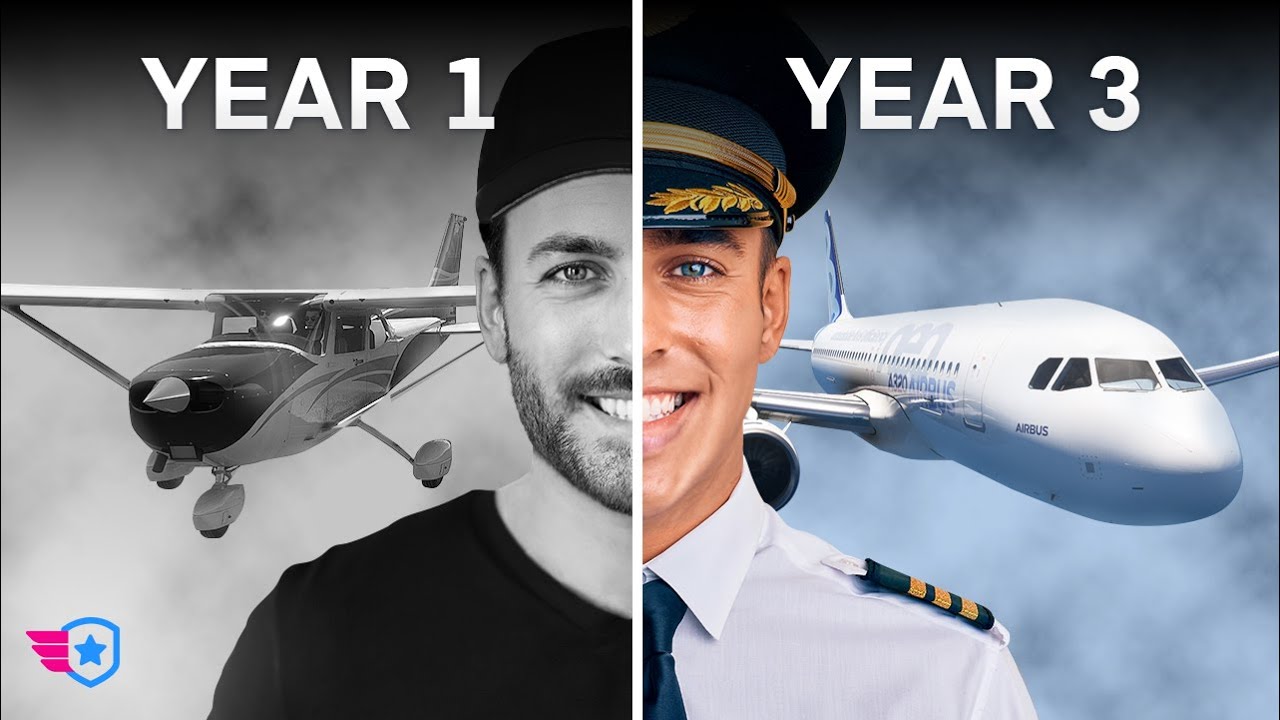
This is why being airline-ready has to do with more than passing check trips. Keep your documents neat. Build a specialist curriculum vitae. Practise aptitude screening if the airlines you target use it. Get ready for competency-based interviews. Maintain your English style crisp if you are applying in an international environment. None of this is attractive, but it matters.
A strong candidate typically looks surprisingly normal in the beginning glimpse. Solid training record, no dramatization, good preparation, mature responses, professional mindset. Airline companies like dependability. They are not hiring a brand. They are employing somebody they can trust in a structured procedure at 3:40 in the morning after a weather condition diversion and a long obligation day.
The less visible abilities make a huge difference
Some pilots are practically sharp and still struggle at choice. Generally the problem sits in the softer side of professionalism and trust. Can you approve guideline well? Can you speak clearly without overexplaining? Can you admit uncertainty without cold? Can you recover from an error and step on?
These high qualities start developing long before any airline company interview. They develop in the training setting, in how you prepare for instructions, just how you reply to obstacles, and exactly how seriously you take tiny criteria. Showing up late, blaming others, and dealing with checklists casually are not harmless trainee behaviors. They are very early indications of the state of mind airline companies do not want.
The best students I have enjoyed were not constantly the fastest learners. They corresponded. They review in advance. They asked valuable inquiries. They did not do confidence for the space. That quiet professionalism and trust takes a trip far.
What "airline-ready" really looks like
By the time you prepare to use, you should have more than a permit folder. You should have the ability to show that you can find out in a demanding atmosphere, work within procedures, interact efficiently, and carry yourself like a future initial police officer. That indicates your technical criterion is only component of the picture.
An airline-ready candidate in Europe typically has actually the required EASA certifications, existing medical, and enough recency to step into an employment procedure confidently. Equally as significantly, that prospect understands the operational culture they are entering. Commercial air travel is improved standardisation, team effort, and regimented decision-making. The earlier you lean right into that society, the smoother your shift will be.
There is no single best route. Some pilots come through huge academy programs and move swiftly right into the ideal seat of an Airplane or Boeing. Others train modularly, instruct, tow banners, fly survey, or construct experience in smaller business functions before signing up with an airline company later. Both courses can create outstanding pilots. The usual string is not the sales brochure course. It is the top quality of judgement created along the way.
A final word for people standing at the start
If you are serious about ending up being an airline pilot in Europe, maintain the ambition, yet pair it with research and patience. Reserve the Class 1 clinical first. Learn the licensing framework. Contrast colleges carefully. Build a conventional spending plan. Anticipate the theory to be requiring and the sensible training to extend you. Aim not simply to pass, however to become the sort of individual an airline company would desire in a cabin on a difficult day.
That state of mind changes everything. It keeps you from chasing glossy faster ways. It helps you ask far better questions. It makes you educate with function instead of merely collecting hours. And when the opportunity lastly arrives, as it usually provides for people that remain prepared, you will certainly not just have the documents. You will await the job.